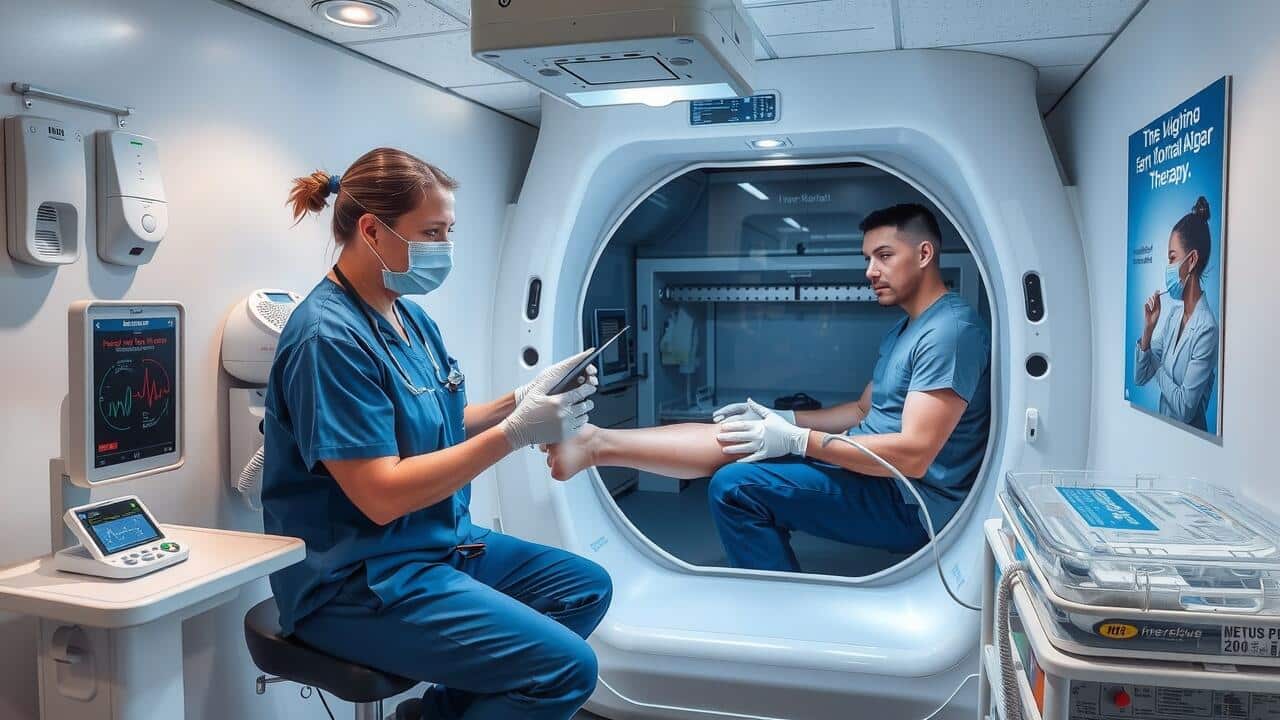
At the American Woundcare Center, we specialize in advanced Wound Care and Hyperbaric Medicine, providing patients with comprehensive treatment solutions for complex and chronic wounds. Our dedicated team of healthcare professionals utilizes cutting-edge techniques and therapies to promote optimal healing, ensuring patients receive personalized care tailored to their unique needs. Through the innovative use of hyperbaric oxygen therapy, we enhance the body’s natural healing processes, increase blood flow, and reduce the risk of complications, making a significant difference for those suffering from difficult-to-heal wounds. Our commitment to excellence and compassionate support helps patients regain their quality of life, allowing them to heal safely and effectively.
Patient Care and Management
Effective patient care in the context of hyperbaric oxygen therapy (HBOT) involves a multidisciplinary approach that addresses both the physical and emotional needs of individuals undergoing treatment. Physicians and healthcare providers must conduct thorough evaluations of each patient, focusing on their medical history, the nature of their wounds, and any underlying conditions that may influence healing, such as diabetes or vascular complications. Continuous monitoring during therapy sessions is essential to ensure patient safety and comfort, particularly in managing potential side effects or complications associated with increased atmospheric pressure and exposure to high oxygen levels.
Education plays a crucial role in patient management. Clear communication about the process and benefits of HBOT helps alleviate concerns related to claustrophobia and anxiety, which can impact adherence to treatment. Additionally, providing information on potential risks, such as barotrauma or toxicity from high oxygen levels, equips patients with the knowledge to recognize signs of complications. Coordination among the healthcare team, including surgeons, wound care specialists, and nursing staff, is vital for optimizing treatment plans and achieving the desired outcomes in wound healing.
Role of the Healthcare Team
A comprehensive approach to patient care in hyperbaric medicine relies on a dedicated team of healthcare professionals. Physicians specializing in hyperbaric medicine guide treatment protocols for conditions such as diabetic foot ulcers, osteoradionecrosis, and carbon monoxide poisoning. Nurses play a critical role in monitoring patients throughout their therapy sessions. They assess vital signs and manage any potential complications that may arise, ensuring a safe environment within the hyperbaric chamber. Podiatrists often focus on the treatment of wounds, especially in patients with chronic conditions that compromise circulation. Each member of the team contributes unique expertise, enhancing patient outcomes.
Communication among team members fosters a collaborative environment essential for effective treatment planning. Regular interdisciplinary meetings allow for the sharing of insights regarding the patient's progress. Transcutaneous oximetry may be utilized by specialists to gauge oxygen levels in tissues, aiding in decision-making. Attention to the signs of hypoxia and swelling is paramount, particularly for patients with crush injuries or compartment syndrome. The team's ability to adapt the treatment plan based on ongoing assessments can significantly affect recovery trajectories, particularly in complex cases such as gas gangrene or Fournier's gangrene. Each healthcare professional's contribution ensures that patients receive well-rounded care tailored to their individual needs.
Hyperbaric Chamber Types
Hyperbaric chambers come in two primary types: monoplace and multiplace. Monoplace chambers are designed to accommodate one patient at a time. These units are often made from transparent acrylic, allowing for easy monitoring while providing a controlled environment. Patients lie on a stretcher inside the chamber filled with pure oxygen at higher than normal atmospheric pressure. This design is particularly beneficial for treating localized conditions and allowing for focused oxygenation.
Multiplace chambers, in contrast, can accommodate multiple patients simultaneously. These chambers are usually constructed from steel and allow for the administration of oxygen through masks or hoods, ensuring safety and comfort during the treatment. They are often utilized in hospital settings for patients with more complex needs requiring supervision. The ability to treat several patients at once makes multiplace chambers a practical option for outpatient clinics and facilities with a high volume of patients receiving hyperbaric therapy. Each chamber type plays a specific role in wound care management, catering to different patient needs and clinical situations.
Differences Between Monoplace and Multiplace Chambers
Monoplace chambers are designed to accommodate a single patient, providing a highly controlled and quiet environment for hyperbaric oxygen therapy. These chambers typically utilize a transparent acrylic shell, allowing medical professionals to easily monitor the patient throughout the treatment. The process usually involves delivering pure oxygen at elevated pressures, directly influencing the physiology of hypoxic tissue. This direct method of therapy can be particularly beneficial for specific conditions, such as diabetic ulcers and venous stasis ulcers.
Multiplace chambers, on the other hand, can hold multiple patients simultaneously, making them suitable for larger clinical settings. These chambers are constructed from steel, providing a robust environment where patients can receive hyperbaric oxygen therapy while also being able to interact with healthcare providers. The therapy regimen in multiplace chambers often necessitates the use of face masks for oxygen delivery, which can be less comfortable for some patients. This setup allows for a broader range of monitoring and interaction among therapists and specialists, facilitating a team approach to the management of conditions like gas gangrene and necrotizing fasciitis.
Risks and Complications
Patients undergoing hyperbaric oxygen therapy may face various risks and complications. One significant concern is the potential for arterial gas embolism, a life-threatening condition that occurs when air bubbles enter the bloodstream. This complication can lead to severe damage to vital organs and necessitate immediate medical attention. Other risks include pulmonary barotrauma, which can result in lung collapse if pressure changes are not managed correctly. Individuals with a history of pulmonary disease, such as severe asthma or COPD, should be carefully evaluated before therapy to mitigate these risks.
Infections represent another critical complication associated with hyperbaric treatments. Patients with existing infections, such as necrotizing soft tissue infections, may experience worsened conditions despite receiving adjunct therapies. The healthcare team must closely monitor adherence to safety protocols, especially when managing patients with compromised immune systems, like diabetic individuals or those undergoing skin grafting procedures. Regular assessments of vital signs and continued communication between healthcare providers can help identify any emerging complications early and ensure the best possible outcomes for patients.
Common Issues Associated with Therapy
Hyperbaric oxygen therapy is generally safe, but certain risks and complications may arise, particularly in patients with pre-existing conditions. Some individuals may experience oxygen toxicity, leading to symptoms such as seizures or convulsions, especially in those with a history of brain injury or concurrent use of certain medications. Inadequate management of carbon dioxide retention during therapy can also present challenges for patients with chronic obstructive pulmonary disease (COPD) or similar respiratory issues.
Complications related to ear discomfort and tympanic membrane injuries are common due to the pressure changes experienced in hyperbaric chambers. Affected patients, particularly those with prior surgery, may require special attention to avoid barotrauma. In addition, the potential for infections, particularly in those with chronic wounds or diabetes mellitus, necessitates diligent monitoring by healthcare professionals throughout the treatment process. Regular assessments and adherence to clinical guidelines are crucial for minimizing these risks and ensuring effective patient care.